
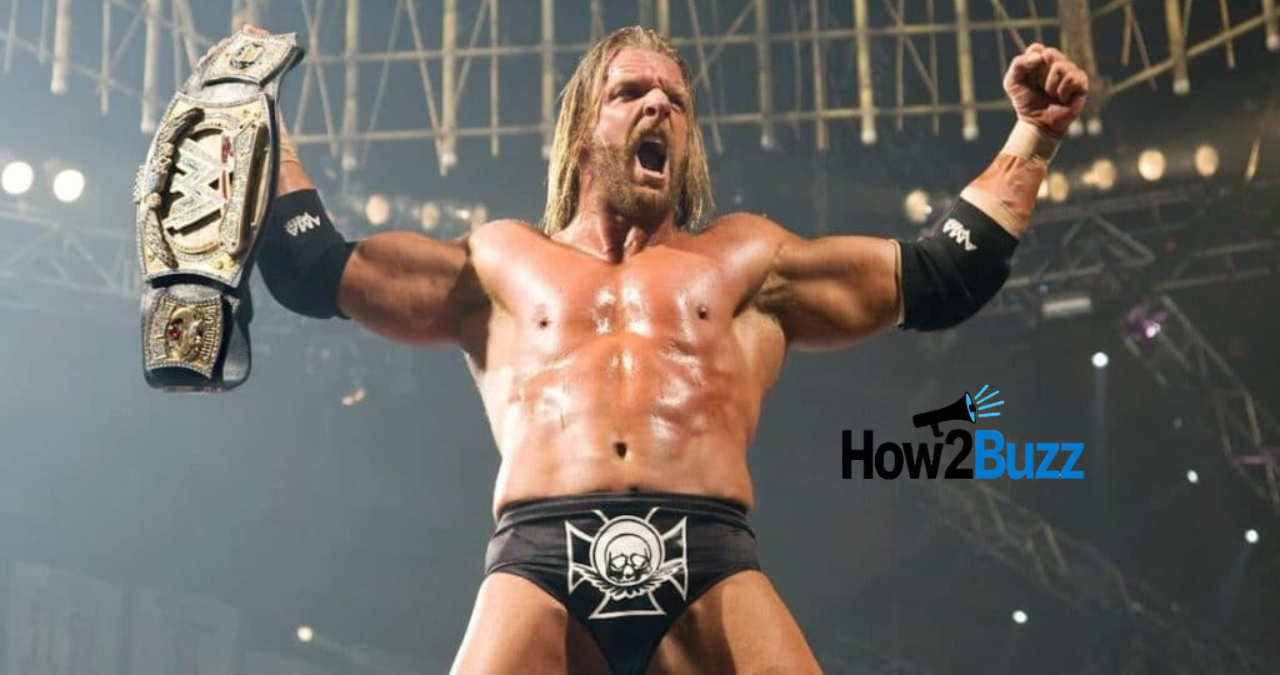

When you think about professional wrestling legends, one name instantly commands respect: Triple H. Known as “The Game” and the “Cerebral Assassin,” he wasn’t just another guy in the squared circle—he was a force who shaped an entire era. From his iconic rivalries to his corporate role behind the scenes, his journey proves that passion and persistence can take you from the locker room to the boardroom.
What makes his story even more fascinating is the way he adapted over decades. Unlike many stars who burn bright and fade, Triple H kept reinventing himself. He went from being a villain fans loved to hate, to one of the most respected figures in the wrestling industry. His career isn’t just about championship belts; it’s about influence, innovation, and leaving a legacy that future generations will follow.
Triple H and the Early Years
Before he became one of the most recognizable names in wrestling, Triple H started as a kid from New Hampshire with big dreams. His passion for bodybuilding and old-school wrestling heroes shaped his vision early on. At a time when the industry was dominated by larger-than-life characters, he knew he had to stand out not just with muscles but with psychology, storytelling, and character work.
He first broke into the scene under the name Hunter Hearst Helmsley, portraying a blue-blood aristocrat. While the gimmick was over-the-top and even mocked at times, it gave him a foot in the door. This role was critical because it taught him how to play the heel effectively, laying the foundation for the ruthless character that would eventually dominate WWE’s Attitude Era.
Triple H and the Rise of “The Game”
Triple H really hit his stride when he transformed into “The Game.” This wasn’t just a nickname—it was a mindset. He became a ruthless competitor who studied opponents, dissected weaknesses, and always seemed two steps ahead. That cerebral approach made him stand out among peers, many of whom relied solely on brute force or crowd appeal.
During this period, his rivalries with icons like The Rock, Stone Cold Steve Austin, and Mick Foley elevated him to the top of the card. He wasn’t just keeping up with legends; he was defining the standard. The way he blended storytelling with in-ring intensity made his matches unforgettable. “The Game” era cemented him as one of the most complete performers in the history of professional wrestling.
Evolution of the Character
One of the secrets behind his longevity is how often Triple H reinvented himself. Wrestling fans know that staying relevant for decades isn’t easy. His transformation from the aristocrat, to the leader of D-Generation X, to the cold and calculating World Champion, and eventually into the corporate authority figure, shows just how versatile he was.
Every phase of his career reflected the era he was in. When wrestling leaned into edgy, rebellious storylines, he was at the forefront with DX. When the industry demanded strong world champions, he stepped into that role without hesitation. Later, when fans wanted authenticity, he became the behind-the-scenes leader who built stars in NXT. Few wrestlers have managed to evolve so seamlessly across different generations.
D-Generation X and the Rebel Spirit
It’s impossible to talk about Triple H without talking about D-Generation X. Alongside Shawn Michaels, he was one of the masterminds behind one of the most influential factions in wrestling history. DX brought a rebellious, irreverent energy that perfectly captured the late ’90s culture. Fans loved their attitude, their pranks, and the way they pushed boundaries.
Triple H’s leadership of DX after Michaels stepped away proved his ability to carry the group. He turned what could have been a one-man show into a powerful faction, introducing talents like X-Pac, Billy Gunn, and Road Dogg into the spotlight. The group changed wrestling forever, making it clear that factions could dominate both storylines and merchandise sales.
Championship Reigns and Rivalries

Triple H’s career is filled with championship gold. He held multiple World Championships, Intercontinental titles, and tag team belts, but more important than the number of reigns was the way he defended them. Each title match was a story, each feud felt deeply personal, and that’s what made fans invest.
His rivalries with names like The Rock, Kurt Angle, and John Cena weren’t just matches; they were chapters in wrestling history. What set him apart was his ability to make his opponents look strong while still coming out as “The Game.” That balance is rare and speaks to his understanding of the bigger picture in professional wrestling.
Behind the Curtain: The Executive Role
As his in-ring career slowed down, Triple H transitioned into a corporate role. For many, this is where his influence became even more significant. As the head of talent development and creative forces like NXT, he created a platform where new stars could shine. Wrestlers like Seth Rollins, Roman Reigns, and Charlotte Flair benefited from his vision.
His philosophy emphasized storytelling, in-ring psychology, and respecting wrestling traditions while still modernizing the product. Many fans argue that NXT under Triple H’s leadership became the purest form of wrestling WWE had seen in years. It was a blend of indie spirit with global exposure, proving his understanding of what fans truly wanted.
Legacy and Lasting Influence
Triple H isn’t just remembered for what he did in the ring; his legacy goes beyond that. He shaped the culture of wrestling, mentored countless superstars, and ensured that the business evolved to stay relevant in modern times. For younger wrestlers, his career serves as a blueprint: work hard, evolve constantly, and never stop learning.
Fans, too, owe much of their favorite wrestling moments to him. From wild DX antics to unforgettable world title matches, he gave audiences memories that still resonate. His ability to blend entertainment with athleticism ensured that he wasn’t just a star of his era, but a timeless figure in wrestling history.
Conclusion
Triple H’s story is proof that professional wrestling is more than just scripted matches—it’s about passion, creativity, and evolution. From his beginnings as Hunter Hearst Helmsley, to his dominance as “The Game,” to his transformative role as an executive, he has left an impact that goes beyond the ring.