
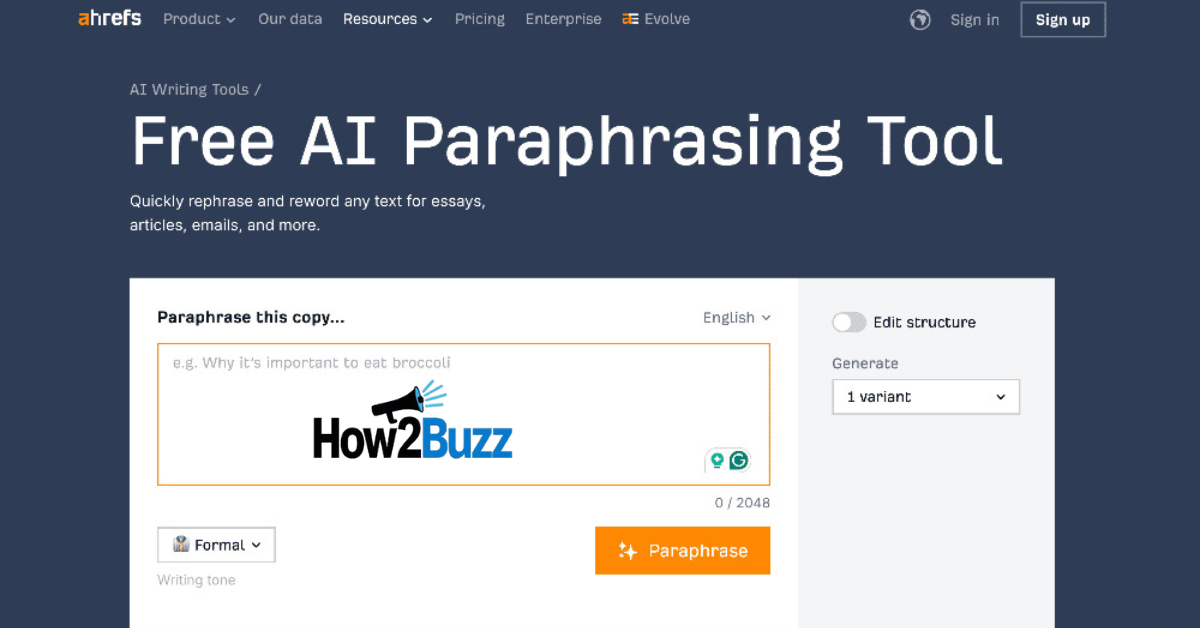

When it comes to content creation and SEO, many writers and marketers look for tools that not only help them analyze keywords but also improve how they express ideas. That’s where the concept of ahrefs paraphrase enters the scene. This phrase has been gaining attention among bloggers, SEO specialists, and digital marketers who want to refine their writing while staying in line with search engine requirements.
The beauty of paraphrasing in an SEO-friendly way is that it keeps your content unique without losing the original meaning. When combined with Ahrefs insights, it becomes a powerful way to improve rankings while maintaining reader engagement. If you’ve ever struggled with rewriting text so that it feels fresh and natural, understanding this approach will give you a strong edge.
Why Writers Rely on Ahrefs Paraphrase for SEO Growth
The primary reason content writers and SEO professionals explore ahrefs paraphrase techniques is because unique content is non-negotiable in today’s digital world. Search engines have become smart enough to detect duplicate content, which means lazy copy-pasting is no longer an option. With paraphrasing, your message remains intact, but the delivery is refreshed and original.
Another reason is that Google rewards readability and clarity. Paraphrased content is often easier to digest because it avoids repetitive wording and unnecessary jargon. When paired with keyword insights from Ahrefs, it gives your articles the perfect balance between being user-friendly and optimized for search.
How to Use Ahrefs Paraphrase Effectively in Content Creation
Knowing how to apply ahrefs paraphrase methods can transform your content workflow. It’s not about mechanically replacing words with synonyms. Instead, it’s about restructuring sentences, simplifying ideas, and making your content flow better. This way, your readers feel like they’re getting fresh insights every time, even if the core idea is familiar.
For instance, when you find a competitor’s article ranking for a specific keyword, you don’t need to copy it. Instead, you can study their approach, use Ahrefs to find content gaps, and then paraphrase the idea in your own words while adding new insights. The end result is something original that stands out to both readers and search engines.
The Balance Between Paraphrasing and Originality
Paraphrasing often gets misunderstood as a shortcut to originality, but it’s much more than that. The real strength lies in blending paraphrased lines with your unique voice. If every sentence is paraphrased word-for-word, the content risks sounding mechanical or awkward. A balanced approach is always best.
Adding personal examples, real-life cases, or even humor ensures that your writing doesn’t feel like a robot restructured it. Originality combined with smart paraphrasing ensures your content meets SEO standards while being enjoyable to read.
Why SEO Experts Appreciate the Role of Paraphrasing
SEO experts often recommend paraphrasing because it helps in creating multiple pieces of content around similar topics without risking duplication penalties. When you publish blogs, guides, and articles on overlapping subjects, paraphrasing ensures each one feels different and valuable to readers.
Another benefit is scalability. Agencies working with dozens of clients can’t afford to waste time reinventing the wheel for each post. With paraphrasing strategies in place, they can produce high-quality content faster while staying within search engine guidelines.
Common Mistakes to Avoid in Paraphrased Content
One of the most frequent mistakes writers make is overdoing the process. When every single word is twisted into an unnecessary synonym, the final piece feels unnatural. Readers might bounce off the page quickly, which harms engagement rates. That’s why paraphrasing should enhance readability, not complicate it.
Another mistake is ignoring context. Just because two words are technically synonyms doesn’t mean they fit the sentence in the same way. Using the wrong substitute can change the tone, reduce clarity, or even alter the meaning altogether. Always prioritize accuracy and clarity over trying to sound overly different.
Ahrefs Insights Combined with Paraphrasing
What makes ahrefs paraphrase stand out is its connection to keyword analysis. With Ahrefs, you get detailed reports on keyword difficulty, search intent, and competition. By paraphrasing content around those keywords, you can create multiple high-quality versions of articles that still target the same topic cluster.
This method not only expands your content library but also helps you dominate search results. Instead of one article ranking, you might have several that collectively build authority in your niche. That’s the kind of strategic edge SEO professionals are always looking for.
Best Practices for Sustainable Paraphrased Content

A great rule of thumb is to always read the original text, close it, and then write your own version in a natural flow. This ensures you’re not just swapping words but actually creating a fresh perspective. Only then can paraphrasing serve as a tool for uniqueness rather than duplication.
Another practice is to regularly update your paraphrased content. SEO is not static, and neither should your blog posts be. Revisiting and refreshing older content ensures you maintain relevance, strengthen keyword presence, and stay aligned with algorithm updates.
Tools That Complement the Paraphrasing Process
While Ahrefs is primarily a research tool, it works beautifully when paired with paraphrasing platforms or even manual rewriting. Grammar checkers, readability tools, and AI-driven writing assistants can all contribute to making paraphrased text flow better and read more naturally.
However, it’s important not to become overdependent on tools. Machines are helpful, but the final human touch matters most. Great content resonates with people, and no tool can replace your personal experience, creativity, and storytelling.
The Future of Paraphrasing in SEO
As algorithms evolve, paraphrasing will continue to play a big role in SEO strategies. Search engines are moving toward understanding context and user intent rather than just matching keywords. That means paraphrasing that adds clarity and value will always remain relevant.
In fact, future SEO may reward content that explains the same idea in different yet engaging ways. This gives paraphrased content a strong place in long-term strategies. Writers who master this skill will be well-prepared for the next wave of digital trends.
FAQs About Ahrefs Paraphrase
What is ahrefs paraphrase in simple terms?
It refers to the practice of paraphrasing content while using insights from Ahrefs to guide keyword placement and SEO optimization.
Is paraphrasing the same as rewriting?
Not exactly. Rewriting may involve bigger structural changes, while paraphrasing usually focuses on expressing the same idea in a new way without changing meaning.
Can paraphrased content rank on Google?
Yes, as long as it is well-written, unique, and adds value. Paraphrasing alone won’t guarantee ranking, but paired with strong SEO practices, it can help.
How often should paraphrasing be used in content marketing?
It’s best used when covering overlapping topics, updating older posts, or creating multiple versions of content for different platforms.
Does paraphrasing reduce plagiarism risks?
Absolutely. Proper paraphrasing ensures your work doesn’t get flagged as duplicate, provided it is done with originality and not just word-swapping.