
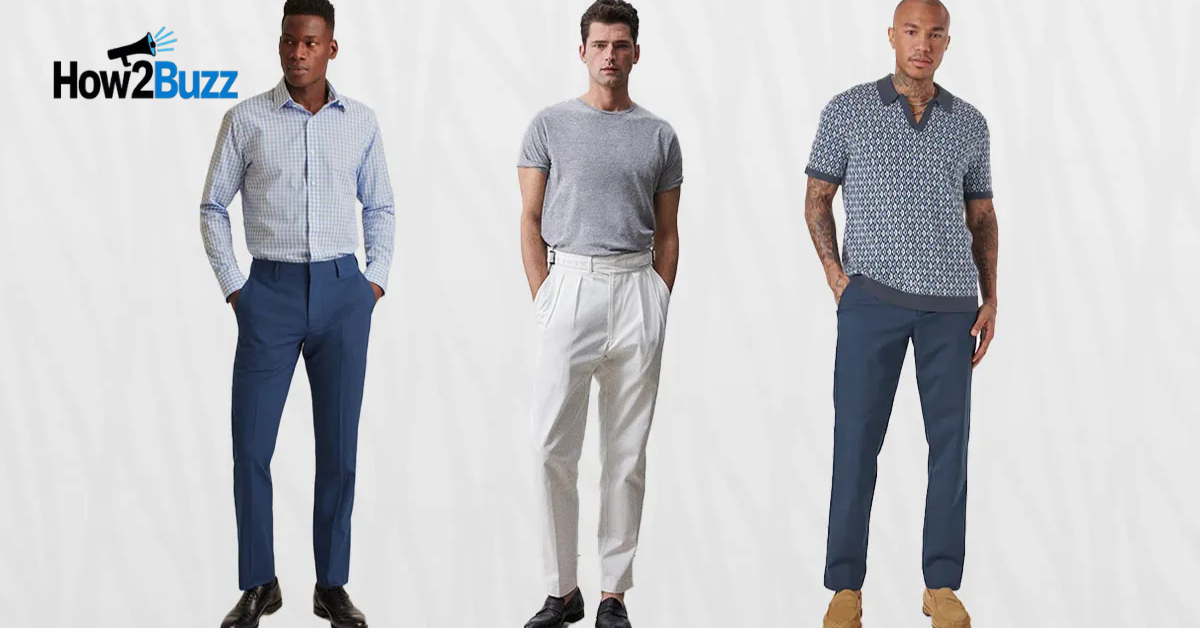

Work attire has always been a reflection of professional culture, and business casual has steadily transformed into a defining style for the modern workplace. Gone are the days when every professional was expected to wear a full suit or stiff formal wear. Today, the mix of comfort and professionalism allows people to look polished while still feeling relaxed, a balance that has become a necessity in contemporary office environments.
The shift toward this dress code didn’t happen overnight. As industries evolved, especially with the growth of creative and tech companies, traditional rules of office clothing started to loosen. Employees and employers alike began to value flexibility and individuality, leading to the rise of styles that honor both professionalism and personal comfort.
Understanding What Business Casual Really Means
One of the biggest challenges professionals face is figuring out what business casual actually includes. Unlike a uniform dress code, it is intentionally flexible. For men, it might mean chinos with a button-down shirt, while for women it could be a blouse with tailored pants or a modest dress. The beauty of this style is that it allows for creativity while still staying appropriate for professional settings.
At its core, this approach to office attire is all about striking a balance. It bridges the gap between being too casual and overly formal, giving workers the freedom to dress in ways that are comfortable yet still convey respect for the workplace. Since every industry and company culture interprets it differently, the key is understanding context and making adjustments accordingly.
Why Business Casual Became the New Standard
The popularity of business casual can be tied to changes in how we view work and life. Modern offices prioritize productivity, innovation, and collaboration, all of which benefit from an environment where people feel comfortable. It’s hard to imagine brainstorming new ideas or sitting in back-to-back meetings if you’re distracted by an uncomfortable suit or shoes that pinch your feet.
Another reason this dress code became a standard is inclusivity. It opens the door for employees to express their individuality without feeling trapped by outdated norms. At the same time, it levels the playing field by offering flexibility that fits different body types, personal styles, and even cultural backgrounds. This inclusivity adds to workplace morale and helps people feel more like themselves at work.
The Benefits of Embracing a Relaxed Dress Code
When companies encourage a relaxed style of dress, the impact goes beyond looks. A more casual approach creates a culture of openness and accessibility, which can improve communication between teams. Managers appear more approachable, employees feel more confident, and clients often sense the authenticity of an organization that values comfort alongside professionalism.
Additionally, comfort directly impacts productivity. Employees who feel good in what they’re wearing are less likely to be distracted and more likely to focus on their work. This psychological boost is subtle but powerful, reinforcing why companies are embracing this shift in attire.
Business Casual for Different Industries
Even though this dress style is widely accepted, its definition changes from one industry to another. A law firm may allow dress pants and a neat sweater, while a startup might encourage jeans and stylish sneakers. Understanding these nuances is essential to dressing appropriately in any given workplace.
Creative industries often lean toward flexibility, celebrating individuality and personal style. More traditional sectors, like finance or consulting, usually maintain stricter interpretations that lean closer to traditional business attire. The key lies in observing company culture and using good judgment.
Style Tips to Nail the Look
Mastering this dress code requires balance. A good starting point is investing in versatile basics that can be dressed up or down. For men, neutral chinos, blazers, and collared shirts are staples. For women, tailored pants, skirts, and blouses in breathable fabrics are reliable options. Footwear matters as well — polished loafers, flats, or low-profile sneakers can elevate an outfit without going overboard.
Accessories also play an important role. A sleek belt, subtle jewelry, or a well-chosen bag can enhance the outfit without distracting from professionalism. The trick is to keep things simple, avoiding extremes that might tip the outfit too far into casual territory.
Common Mistakes to Avoid
It’s easy to misinterpret this dress code, which is why mistakes happen often. One common error is going too casual — worn-out jeans, graphic t-shirts, and flip-flops are rarely appropriate. The other mistake is leaning too formal, which defeats the purpose of the style.
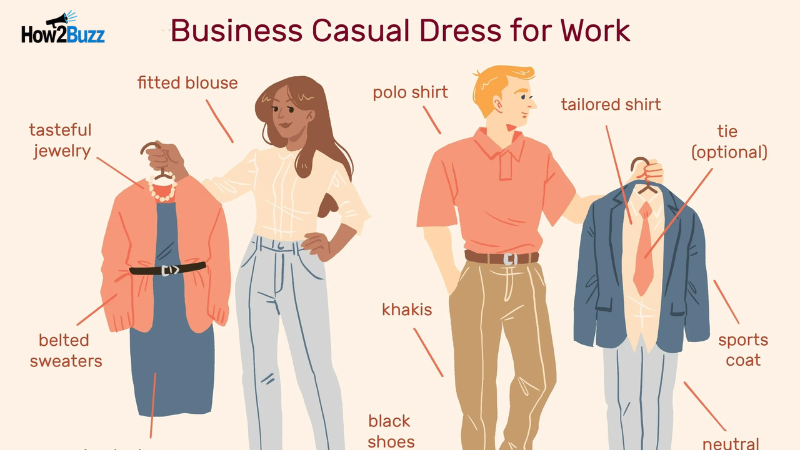
Another pitfall is ignoring the company culture. Just because one office allows polo shirts doesn’t mean another will. It’s always smart to start slightly more formal and adjust once you understand the unspoken rules of your workplace.
The Future of Office Fashion
As remote work and hybrid offices become more common, workplace fashion will continue to evolve. The definition of office attire is likely to become even more relaxed, with business casual serving as the bridge between professional appearance and personal comfort. Clothing designed with stretch, versatility, and sustainability in mind will lead the way.
That doesn’t mean professionalism is going away. Instead, companies will continue to value employees who can present themselves appropriately for both in-person meetings and virtual settings. The focus will shift toward adaptability rather than rigid rules.
FAQs About Business Casual
What exactly counts as business casual?
It typically includes tailored pants, blouses, collared shirts, or dresses that aren’t overly formal. Avoid overly casual clothing like ripped jeans, athletic wear, or sandals unless your company culture explicitly allows them.
Can jeans be considered business casual?
In many workplaces, yes — as long as they are clean, dark-washed, and free of rips or distressing. However, not every company allows jeans, so it’s best to check policy or observe what others wear.
Is business casual the same for men and women?
The principles are the same, but the clothing pieces differ. Men may rely on button-downs and slacks, while women often wear blouses, skirts, or tailored pants. The goal for both is to look professional yet approachable.
Should I wear business casual to an interview?
Unless the job description specifies otherwise, this is usually the safest choice. It shows professionalism without being overdressed, which helps you blend into the workplace culture.